模型输出 FunctionCall 时,它并不知道命令真正运行后会发生什么。它只知道自己需要一个 新观察:测试是否通过、文件里有什么、补丁是否被接受、搜索返回了哪些结果。Runtime 真正 执行工具后,要把这个观察用 Tool Result 回灌给模型,然后模型才能继续推理。
因此,工具使用不是一次模型调用,而是一个最小双采样闭环:
采样 1 → Tool Call → Runtime 执行 → Tool Result → 采样 2官方 Function Calling 协议也明确把这个过程拆成:应用声明工具,模型返回工具调用,
应用执行工具,用原 call_id 提交结果,然后再发请求;模型可以给出最终回答,也可以
继续请求工具
(OpenAI Function Calling)。
真正的 Runtime 比箭头更复杂:Call 什么时进历史?一次响应有三个 Call 怎么办?哪些工具 能并发?取消时是否还要写 Output?工具先后完成会不会让历史顺序随机变化?本节沿 Codex 的实际路径逐层回答。
一个 Tool Call 完成时,先记录再执行
Codex 的 SSE 处理器收到完整 OutputItemDone(FunctionCall) 后,会把 Item 交给 ToolRouter。
路由成功后,Runtime 不是先等工具跑完,而是先把模型刚刚输出的 Call Item 写入会话历史
和 Rollout,再创建工具 Future。
async def on_output_item_done(item, sampling_state):
    call = tool_router.build_tool_call(item)

    if call is None:
        await history.record(item)
        emit_visible_item_if_needed(item)
        return ItemOutcome(needs_follow_up=False)

    await history.record(item)  # 在任何副作用之前记录已接收的 Call。

    tool_future = tool_runtime.handle_tool_call(
        call=call,
        cancellation=sampling_state.turn_cancellation.child_token(),
        step_context=sampling_state.step_context,
    )
    return ItemOutcome(
        needs_follow_up=True,
        tool_future=tool_future,
    )
“先记录”不是纯粹的日志习惯,而是恢复不变式。Provider 已经把 Call 交给 Runtime,这是一个已发生 的协议事实。如果执行过程中 Turn 被取消、子进程失败或客户端崩溃,恢复后仍应看到当时模型 发出了哪个 Call。否则持久化历史会假装这次调用从未存在。
Call 先落库也带来责任:Runtime 要尽量为它补上一个配对 Output,即使结果是失败或取消。
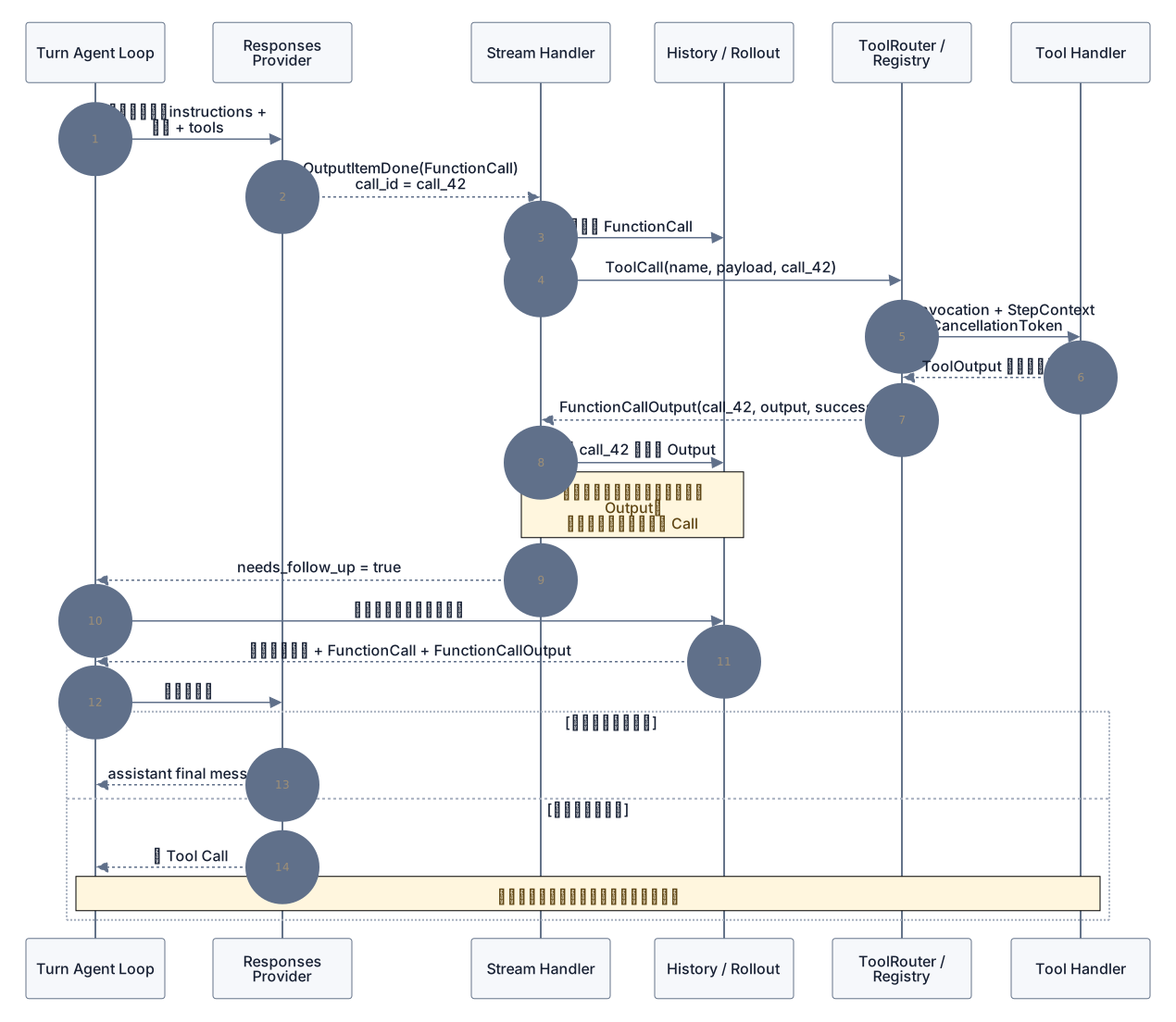
一次模型响应可以启动多个工具 Future
“一次调用、一个结果”是最简示例,不是 Responses 的上限。模型可以在同一个 Response 中输出
多个 Tool Call Item。Codex 在一次 sampling request 期间维护 FuturesOrdered容器;每个完成 Call Item
都会立即生成一个 Future 并入队。
async def consume_one_model_response(stream):
    in_flight = FuturesOrdered()
    needs_follow_up = False

    async for event in stream:
        if isinstance(event, OutputItemDone):
            outcome = await on_output_item_done(event.item)
            needs_follow_up |= outcome.needs_follow_up
            if outcome.tool_future is not None:
                in_flight.push_back(outcome.tool_future)

        elif isinstance(event, ResponseCompleted):
            record_usage(event.usage)
            if event.end_turn is False:
                needs_follow_up = True
            break

    # response.completed 只表示 Provider 完成这次模型响应,
    # 不表示客户端工具都已完成。
    await drain_and_record(in_flight)
    return SamplingResult(needs_follow_up=needs_follow_up)
这里有两个并行的时间轴:
- Provider 时间轴持续输出 Item,最后发
response.completed; - Runtime 时间轴在收到每个完整 Call 后就可以启动对应工具。
这种重叠能减少等待时间。例如模型依次输出两个搜索 Call,第一个不必等第二个 Item 和 Completed 事件才开始。但它没有破坏下一次采样的完整性:外层 Loop 拿到 SamplingResult 前, Runtime 会收束当前所有在途工具。
supports_parallel 不是建议,而是入场约束
多个 Future 存在,不代表所有 Handler 都可以同时修改外部世界。并发读取两个无关文件可能很安全,
但同时应用两个重叠补丁就可能破坏工作区。Codex 让每种工具声明 supports_parallel,然后
在所有工具共享的读写锁上实施。
class ToolExecutionGate:
    def __init__(self):
        self._lock = AsyncReadWriteLock()

    async def run(self, handler, invocation):
        if handler.supports_parallel:
            async with self._lock.read():
                return await handler.invoke(invocation)
        else:
            async with self._lock.write():
                return await handler.invoke(invocation)
读锁可以有多个持有者,所以多个并发工具能同时运行。写锁是独占的,所以一个不支持并发 的工具不只是与其他串行工具互斥,也会与所有正在运行的并发工具互斥。
下面的调用序列说明了这个语义:
A(parallel) B(parallel) C(serial) D(parallel)A 和 B 可以共存。C 必须等 A/B 释放读锁,然后独占执行。D 不能绕过正在等待或执行的 独占区间来破坏串行工具的隔离。这是一个调度正确性合同,不是性能提示。

FuturesOrdered 分离“执行顺序”与“历史顺序”
假设模型按顺序输出 Call A、B、C,三个工具又都允许并发。真实完成顺序可能是 B、C、A。 如果每个工具完成后直接抢锁追加历史,同一输入在不同机器上可能得到不同顺序。对 Prompt cache、 测试复现与调试都很不友好。
Codex 用 FuturesOrdered 解决这个问题。Future 本身仍可以并发运行,但消费者按入队顺序
取结果:
async def drain_and_record(in_flight):
    # Future 可已在后台任意顺序完成。
    async for result in in_flight.in_insertion_order():
        response_input_item = result.unwrap_or_raise_runtime_error()
        await history.record(response_input_item.to_response_item())
最终历史仍是:
Call A, Call B, Call C, Output A, Output B, Output C而不是由时序偶然决定的 Output B, Output C, Output A。要强调的是,这个有序性不能取代
call_id。顺序是为了确定性,call_id 才是每个 Output 对应哪个 Call 的真正关联键。
ToolOutput 自己决定如何对模型说话
工具 Handler 的内部结果不一定是字符串。Exec 可能有退出码、标准输出、标准错误和时间;
MCP 结果可能有结构化 content;某些工具可能返图片或音频。如果 Turn Loop 对所有结果做
str(result),既会丢类型,也会让工具协议每次扩展都修改中央循环。
Codex 把模型可见转换放在 ToolOutput 抽象上:
class ToolOutput(Protocol):
    def to_response_item(
        self,
        call_id: str,
        original_payload: ToolPayload,
    ) -> ResponseInputItem:
        ...
original_payload 决定回应应该是 FunctionCallOutput、CustomToolCallOutput 还是其他配对
类型,call_id 建立关联,具体 Output 实现决定 body 是文本还是结构化 content items。
def function_output_to_response(result, call_id, payload):
    body = truncate_for_model_context(result.model_visible_body)

    if isinstance(payload, CustomPayload):
        return CustomToolCallOutput(
            call_id=call_id,
            output=body,
        )

    if isinstance(payload, FunctionPayload):
        return FunctionCallOutput(
            call_id=call_id,
            output=body,
            success=result.success,
        )

    raise FatalRuntimeError("output cannot represent this payload")
这种“输出拥有序列化”的设计让工具可以演进自己的模型观察格式,同时保持外层循环只处理 统一 ResponseInputItem。工具的原始输出与进入 Prompt 的内容也不必完全相同;超长文本会按上下文 策略截断,媒体还要受模型输入能力约束。
可恢复工具错误也是一种观察
如果 shell 被策略拒绝,最坏的处理是 Runtime 直接丢出异常并关闭整个 Agent。对模型而言, “这条路不可用”本身就是有价值的新信息:它可以换一个不需要提权的命令,可以用读文件工具, 也可以告诉用户任务受限。
Codex 将工具层结果大致分成:
| 结果 | 是否生成 Tool Output | 是否可继续采样 |
|---|---|---|
| 成功 | 是,可带 success=true | 是 |
| RespondToModel / 可恢复失败 | 是,带错误观察与 success=false | 是 |
| 用户取消 | 尽量是,aborted Output | 通常 Turn 后续进入取消收尾 |
| Fatal / task join 破坏 | 不强行伪装成普通结果 | 否,向 Runtime 错误路径传播 |
async def invoke_and_convert(call, handler):
    try:
        output = await handler.invoke(call.invocation)
        return output.to_response_item(call.call_id, call.payload)

    except RecoverableToolError as error:
        return failure_output_for(
            call_id=call.call_id,
            payload=call.payload,
            message=str(error),
            success=False,
        )

    except FatalToolContractError as error:
        raise RuntimeFatal(str(error))
Codex 的集成测试真正捕获第二次请求,验证超时、沙箱拒绝、未知 Custom Tool 和提权 被拒绝等内容会进入与原 call_id 配对的 Output。其中提权拒绝测试还证明循环可以走三次采样:
request 1 → Call 1
request 2 含 Call 1 失败 Output → Call 2
request 3 含 Call 2 成功 Output → Final Message
所以可恢复错误是 Agent 与环境对话的一部分,而不只是发给程序员的日志。
取消分支要区分“已完成”和“正在清理”
取消不是一个简单的 task.cancel()。取消信号与 Handler 完成可能几乎同时发生;某些工具还需要
自己终止子进程、回收管道或完成远程取消。如果 Runtime 无条件终止 task,可能把已经成功的结果
误报为 aborted,也可能把子进程留在后台。
Codex 的处理逻辑可概括为:
async def await_tool_with_cancellation(task, call, cancellation, handler):
    winner = await select(task.finished(), cancellation.triggered())

    if winner is task or task.is_finished():
        return await task  # 保留已完成结果与 completed lifecycle。

    if handler.waits_for_runtime_cancellation:
        # Handler 拥有自己的终止与清理协议。
        await task.finish_cleanup_after(cancellation)
    else:
        task.abort()
        await ignore_cancelled_join(task)

    emit_tool_aborted(call.call_id)
    return aborted_output_for(
        call_id=call.call_id,
        payload=call.payload,
    )
这里的 aborted Output 依然保留原 payload 种类和 call_id。一个 CustomToolCall 被取消后不应突然生成 FunctionCallOutput;否则历史在类型上就无法配对。
第二次采样看到什么
当 Provider 发出 response.completed 后,Codex 还会收束 in_flight。每个结果先转为
ResponseInputItem,再转成历史 ResponseItem 并记录。只有这一步完成,一次 sampling request
才向外层 Agent Loop 返回。
下一次采样并不只发送最新 Output。ContextManager 会从当前历史生成模型可见快照,其中 至少保留这个工具往返的两端:
[
    ...prior_context,
    FunctionCall(
        name="exec_command",
        arguments='{"cmd":"pytest"}',
        call_id="call_42",
    ),
    FunctionCallOutput(
        call_id="call_42",
        output="1 failed, 42 passed",
        success=False,
    ),
]
模型因此可以同时看到“我当时请求了什么”与“环境真正返回了什么”。只回灌 Output 而丢掉 Call,会让参数语义和结果来源变得含糊;只留 Call 而丢 Output,则会让协议处于未完成状态。
needs_follow_up 把工具观察转成下一次采样
工具 Future 记录完毕并不会自动在原 stream 上唤醒模型。一次 Responses 请求已经完成;Runtime 必须回到外层 Loop,决定是否发新请求。
每个已识别 Tool Call 都会设 model_needs_follow_up = true。Provider 明确返回 end_turn=false
时也会设置。外层 Loop 还把待处理的新用户输入合并进条件:
needs_follow_up = model_needs_follow_up or has_pending_input如果需要继续,Loop 还会根据 token 使用和显式请求决定是否先做 context rollover/compaction, 再重新捕获适用的 StepContext 和世界状态,构建新 Prompt 并采样。工具执行时工作区可能已改变, 所以下一步不能无脑复用旧环境快照。
async def continue_after_sampling(result, turn):
    pending = await turn.mailbox.inspect()
    needs_follow_up = result.model_needs_follow_up or pending.has_input

    if not needs_follow_up:
        return await try_stop_hooks_or_complete(turn)

    if turn.context.requires_rollover():
        await rollover_context(turn)

    turn.step_context = await capture_fresh_step_context(turn)
    return CONTINUE_AGENT_LOOP
“第二次采样”因此不是架构中写死的 for range(2)。它是一次 Tool Call/Result 产生的
最小后继。第二次可以给 Final Message,也可以给新 Call;后者再触发第三次采样。
为什么不能边收到结果边启动下一次采样
如果模型一次输出 A、B 两个 Call,A 先完成,Runtime 是否可以马上用 Output A 发起下一次采样, 让 B 继续在后台运行?Codex 当前路径不这样做,理由可从不变式中推出:
- 模型在同一 Response 中同时请求了 A/B,下一次观察应该完整回答这批请求;
- 如果模型基于不完整结果再发起 C,C 可能与仍在运行的 B 产生无法预测的副作用冲突;
- Prompt 中存在未配对 Call,会破坏 Provider 工具协议的完整性;
- Turn 取消、历史压缩和时序复现会同时变得更难。
所以 Codex 会让工具执行与 Provider 剩余输出重叠,但在“新的模型采样”这个边界上设置 join 屏障。这是在延迟与一致性之间的明确取舍。
历史破损时的 Prompt-only 修复
正常路径尽量为每个 Call 记录 Output,但恢复旧 Rollout、截断历史或异常终止后,原始历史 仍可能存在缺口:
... FunctionCall(call_42) ... # 没有 FunctionCallOutput(call_42)ContextManager 在构建模型可见快照时会做配对规范化:给缺 Output 的 client-side Call 紧邻 补入 aborted Output,并删除没有对应 Call 的孤儿 Output。
def normalize_tool_pairs(items):
    calls = index_client_calls_by_call_id(items)
    outputs = index_client_outputs_by_call_id(items)

    for call_id, call_position in calls.items():
        if call_id not in outputs:
            items.insert(
                call_position + 1,
                aborted_output_with_stable_id(call_id),
            )

    items[:] = [
        item for item in items
        if not is_orphan_client_output(item, calls)
    ]
这只是 Prompt-only 协议修复。它不会恢复当时工具的真实 stdout,不会重新运行命令,也不声称 副作用从未发生。它只告诉模型:这次调用没有可用的完整结果,并保护 Call/Output 的输入形状。
server/hosted Tool Search 还有特例:它的执行和结果由 Provider 管理,不能套用所有 client-side 孤儿删除规则。这再次证明,历史规范化必须理解 Item 类型和执行所有权,不能只看 call_id。
一个可复刻的完整工具采样算法
把前面机制收束成 Mini Codex 伪代码:
async def run_one_sampling_step(turn, prompt):
    stream = await model.open_stream(prompt)
    in_flight = FuturesOrdered()
    needs_follow_up = False
    last_message = None

    async for event in stream:
        turn.cancellation.raise_if_cancelled()

        if isinstance(event, OutputItemDone):
            item = assign_item_id_if_missing(event.item)
            call = tool_router.build_tool_call(item)

            if call is None:
                await turn.history.record(item)
                last_message = update_visible_state(item, last_message)
                continue

            # Provider 已交付 Call,先保存协议事实。
            await turn.history.record(item)
            needs_follow_up = True

            future = tool_runtime.run(
                call=call,
                step_context=turn.step_context,
                cancellation=turn.cancellation.child_token(),
            )
            in_flight.push_back(future)

        elif isinstance(event, ResponseCompleted):
            turn.usage.record(event.usage)
            needs_follow_up |= event.end_turn is False
            break

        elif isinstance(event, StreamError):
            raise classify_model_stream_error(event)

    # Join 屏障:不让新采样看到半批结果。
    async for tool_result in in_flight.in_insertion_order():
        output_item = tool_result.to_response_item_preserving_call_id()
        await turn.history.record(output_item)

    turn.cancellation.raise_if_cancelled()
    return SamplingStepResult(
        needs_follow_up=needs_follow_up,
        last_message=last_message,
    )


async def run_tool_follow_up_loop(turn):
    while True:
        turn.step_context = await capture_step_context(turn)
        prompt = await turn.history.build_prompt(turn.step_context)
        result = await run_one_sampling_step(turn, prompt)

        pending = await turn.mailbox.accept_available()
        needs_follow_up = result.needs_follow_up or pending.has_input

        if not needs_follow_up:
            return result.last_message

        if turn.context.needs_rollover():
            await compact_or_rollover(turn)
这份伪代码保留了本节最重要的边界:
- 完整 Item 触发调用;
- Call 早于副作用记录;
- 多个 Tool Future 可并发;
- 每个 Output 保留 call_id 和 payload 类型;
- 结果按入队顺序记录;
- 下一次采样之前必须 join 全部在途工具;
- 是否继续由显式 follow-up 状态决定。
应该如何测试这个闭环
单元测试应保护调度不变式,端到端测试应捕获真实的第二次模型请求。
async def test_second_request_contains_paired_output():
    model.enqueue(FunctionCall(call_id="c1", name="shell", arguments="{}"))
    model.enqueue(FinalMessage("done"))
    tool.return_value = ToolText("ok")

    await agent.run("inspect")

    second = model.requests[1]
    assert second.contains_call("c1")
    assert second.contains_output(call_id="c1", text="ok")


async def test_next_sample_waits_for_all_tools():
    a = ControlledTool()
    b = ControlledTool()
    model.enqueue(tool_calls=[call("a"), call("b")])

    task = spawn(agent.run("inspect both"))
    await a.finish("A")
    assert len(model.requests) == 1

    await b.finish("B")
    await eventually(lambda: len(model.requests) == 2)


async def test_parallel_completion_keeps_insertion_order():
    # B 先完成,但历史仍按 Call A/B 的入队顺序记 Output。
    model.enqueue(tool_calls=[call("a", "c1"), call("b", "c2")])
    b.finish_first("B")
    a.finish_later("A")
    await agent.run("inspect")
    assert history.tool_output_ids() == ["c1", "c2"]


async def test_recoverable_failure_returns_to_model():
    tool.raise_error(RecoverableToolError("permission denied"))
    await agent.run("try action")
    assert model.requests[1].output_for("c1").success is False
Codex 的现有证据包括:未知 Custom Tool 的下一请求捕获,命令提权被拒后重试的三次 采样,沙箱原始错误进入 Tool Output,超时结果和元数据进入第二请求,并发门前取消, 以及历史缺失 Output/孤儿 Output 的规范化测试。
小结:工具让模型从生成器变成闭环控制器
没有 Tool Result 和第二次采样,Tool Call 只是一段结构化愿望。Codex 将它变成闭环的关键是:
- 先记录 Call,保存 Provider 已交付的协议事实;
- 在并发门、工具生命周期和取消边界内执行;
- 将成功、可恢复失败或 aborted 结果转成配对 Output;
- 按稳定顺序记录所有 Output,等当前批次完全收束;
- 把 Call + Output 作为新观察放入 Prompt,用 follow-up 状态启动下一次采样。
这个过程可以反复任意多次。但 Agent 怎样区分“正在采样”、“正在等工具”、“需要压缩”、 “可以停止”与“已被取消”,终止钩子又如何把一次拟似完成改写成继续,这需要一个更完整 的 Agent Loop 状态机。1.5 将在这个闭环上继续向外展开。
评论
登录后即可评论